READ
Identify the threat, weapon and nearby terrain.
 CITY INTEL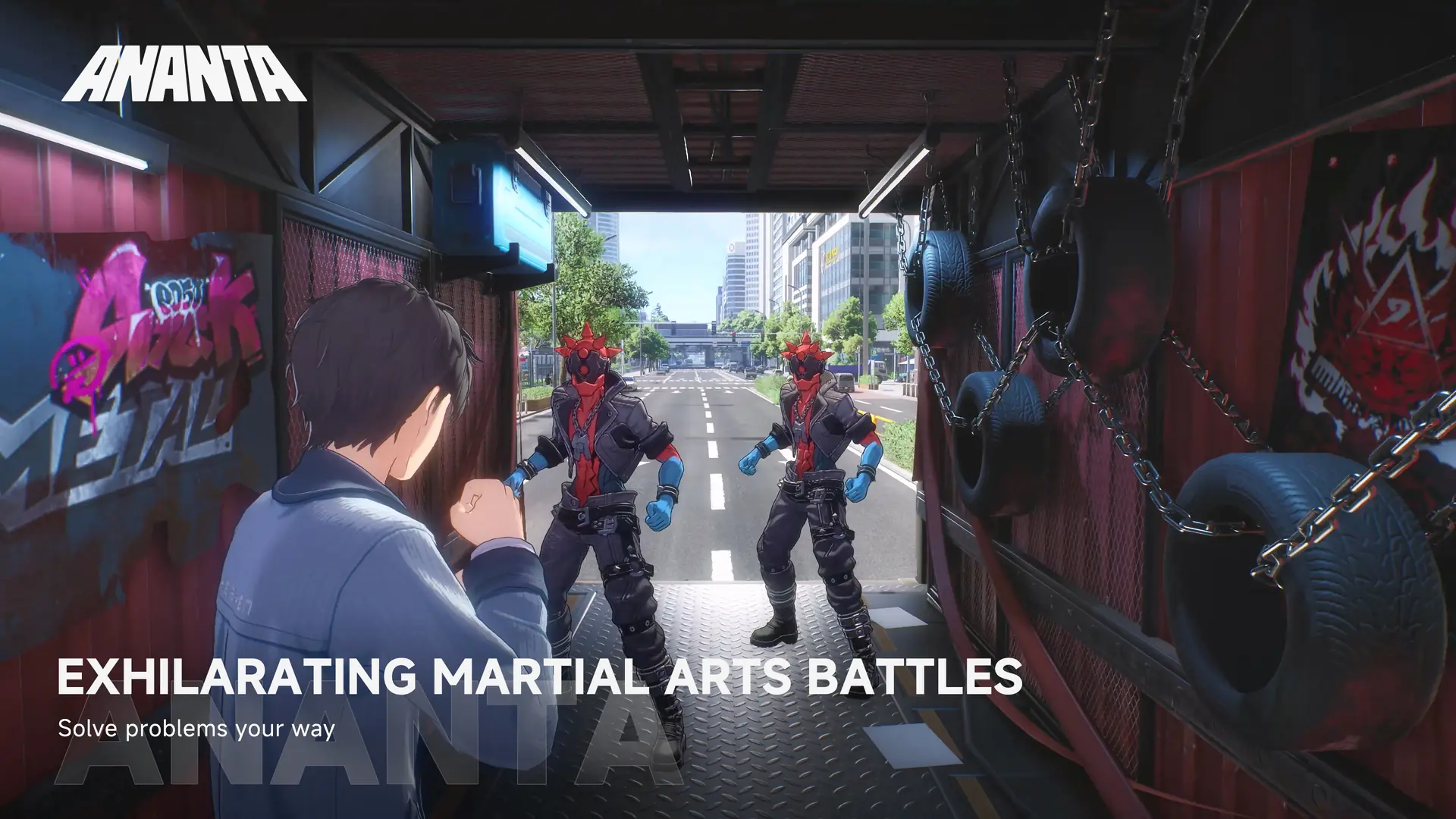
Disarm enemies, use urban props and combine precise dodges or blocks with environmental opportunities.
Identify the threat, weapon and nearby terrain.
Dodge or block with a purpose—not on panic.
Remove the enemy option when the opening appears.
Use the stolen weapon or urban prop, then reset safely.
Launch values, enemy behavior and progression can alter every apparent ranking. This desk tracks durable mechanics first.
01DODGE WINDOWVERIFY
02BLOCK VALUEVERIFY
03DISARM ACCESSVERIFY
04PROP DAMAGEVERIFY
05SWITCH RECOVERYVERIFY
06ENEMY TYPEVERIFY
ANANTA emphasizes decisions and available objects over a fixed weapon rotation.
Enemy type · held weapon · terrain
Precise dodge · counter window
Absorb pressure · create response
Take the enemy weapon
Golf club · trash bin · street prop
Change range · use terrain · exit safely
Direct answers, with the evidence level stated rather than implied.
ANANTA combat is built around improvisation rather than a fixed weapon rotation: you read the enemy’s weapon and the terrain, defend with intent, disarm when an opening appears, then convert with the stolen weapon or a street object before resetting range. Disarms, environmental props, dodges, blocks and counters are all confirmed in official material.
Yes — disarming is shown in official gameplay material and is a core part of the combat identity, alongside picking up urban props such as a golf club or a trash bin. What is not confirmed is the timing: exact disarm windows, frame data and damage values are all unreleased.
The comparison breaks down on one point: ANANTA leans on the environment, not on elemental reactions or a fixed skill rotation. It shares character switching with both games, but its stated identity is disarming enemies and weaponizing street objects inside an open city — a different decision problem from element pairing.
We use cookies for analytics. See our Privacy Policy.