
Read, disarm, improvise
A decision order for dodges, blocks, stolen weapons and environmental objects.
Operational objective
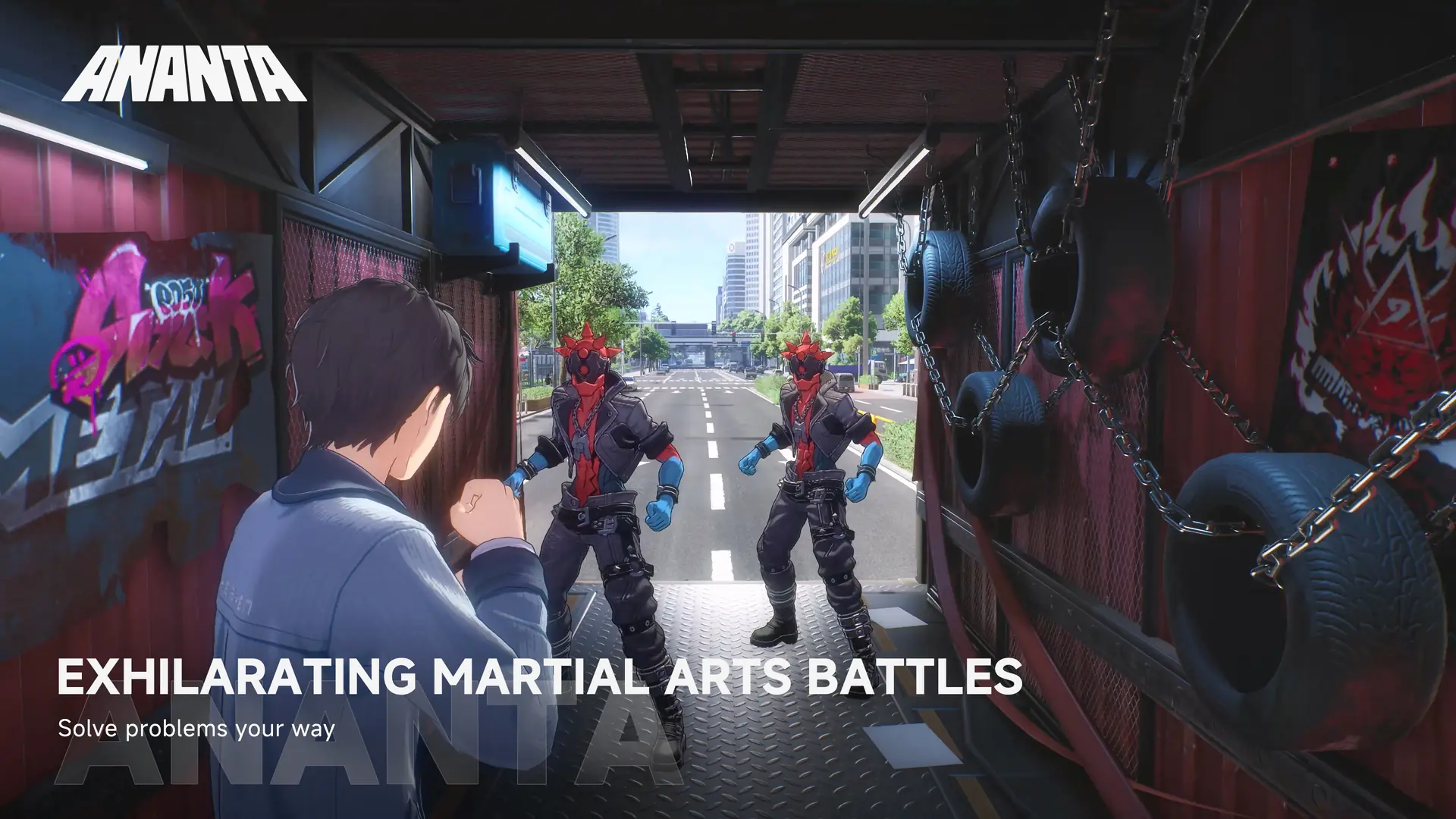
ANANTA fights are built around a loop the footage shows repeatedly: read what the enemy is holding, take it away, spend it, and get back to neutral before the street catches up. This page fixes the order of those decisions, so improvisation stays deliberate instead of becoming button-mashing with extra steps.
Decision route
- Read the weapon before the person. What someone is holding tells you their range, their opening and what you gain by taking it — three answers from one glance.
- Defend toward something, never merely away. A dodge that ends beside a usable object or behind the second attacker has done two jobs; one that only avoids damage has done half of one.
- Disarm on the recovery, not the swing. The window the footage keeps showing is the moment after a committed attack, when the weapon is extended and its owner is not.
- Spend a stolen weapon on the problem it solves, then drop it. Carrying it into the next exchange converts a temporary advantage into a fixed limitation.
- Reset before the street does. These fights happen in a city that keeps moving — the correct end of an exchange is a position, not a body count.
Failure review
- Holding a stolen weapon because it feels strong, in a fight that has already moved past what it was good for.
- Blocking in place against an enemy whose whole job is to keep you still until a second one arrives.
- Judging a weapon by the damage it did once, without noting where you were standing when it worked.
!
Unreleased: damage values, stagger rules, how long a stolen weapon lasts, enemy variety per district and whether disarms differ by weapon class. The order above comes from what footage demonstrates, not from numbers nobody outside the studio has.